Sleep surfaces · Family guide
A Practical Guide to Organic Crib Sleep Surfaces
A crib mattress is easy to overlook until the room is assembled: the crib stands ready, the sheets are folded, and the question of what lies beneath the baby suddenly seems less like a shopping decision than a small study in materials, measurements, and trust. “Organic” can be a useful starting point, but it is not a substitute for checking construction, fit, firmness, care instructions, and current safe-sleep guidance.
A clear-eyed guide to evaluating crib mattress materials, certifications, fit, and everyday care.
Begin with the sleep surface, not the label
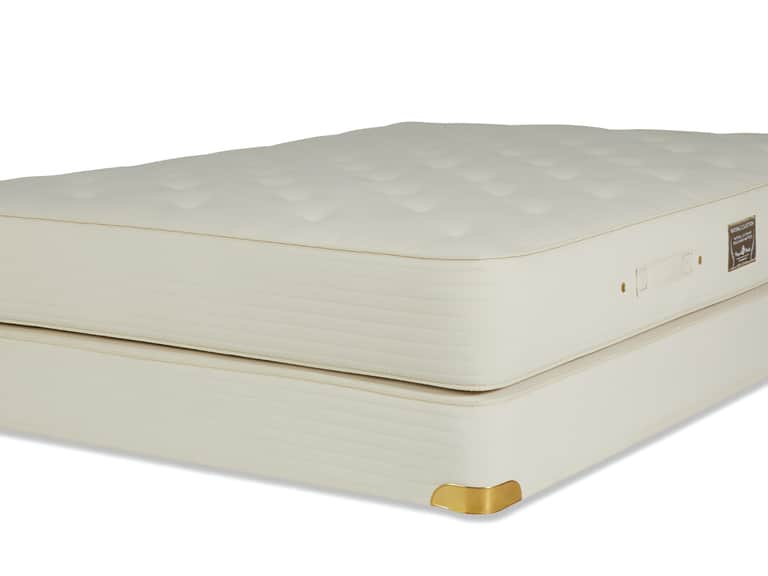
Organic crib mattresses appeal to parents who want to understand what a baby’s sleep environment is made of. That instinct is reasonable. A mattress may contain a core, padding, fabric, thread, adhesives, barriers, and finishes; a broad claim on a product page may refer to only one of those components. The useful question is not simply whether a mattress is organic, but which materials are present, where they are used, and how the manufacturer documents them.
Read the construction description from the center outward. Is the support core made from foam, springs, or another material? What fibers make up the padding? What is the cover made of, and is it removable? Are there coatings, waterproof layers, or treatments? If information is missing or unclear, ask the manufacturer for a materials breakdown and written care instructions rather than inferring details from a name, color, or marketing phrase.
Natural and organic are not interchangeable terms. “Natural” may describe a material’s origin, but it does not by itself establish how that material was grown, processed, or combined with other components. Likewise, a mattress made with organic cotton in its cover is not necessarily an entirely organic mattress. The fine print matters because a finished product is a collection of parts, not a single ingredient.
What the materials can—and cannot—tell you
Organic cotton is commonly used in mattress covers and padding. It can be soft and breathable, but the word “cotton” alone does not tell you whether it is certified organic, how it was processed, or whether the complete product has been evaluated. Check whether the claim applies to the fiber, a particular component, or the finished item.
Some crib mattresses use wool or other natural fibers as padding or as part of a barrier construction. Materials can differ in feel, resilience, maintenance needs, and how they are layered. A product’s material list is therefore a starting point for comparison, not a safety verdict. Avoid assuming that a natural fiber automatically makes a mattress more suitable for an infant; the mattress must still meet applicable requirements, fit the crib correctly, and provide the firm, flat surface required for safe sleep.
Foam and innerspring designs also vary. A label describing a particular core does not establish the firmness or quality of the finished mattress. Nor does an organic claim answer practical questions such as whether the mattress retains its shape, how its cover should be cleaned, or whether a particular waterproof layer is compatible with the manufacturer’s instructions. Compare complete construction descriptions and follow the product’s stated use and care guidance.
For a baby, comfort should not be pursued by adding softness. Adult bedding habits—plush toppers, fluffy pads, extra quilts—do not translate to an infant sleep space. The intended surface is firm and flat, with a fitted sheet designed for that mattress. A crib mattress should not be modified with extra padding or accessories to make it softer, warmer, or more luxurious.
Understand certifications without treating them as magic words
Third-party certifications can help buyers verify specific claims, but each standard has a defined scope. A certification might address the origin or processing of fibers, the contents of a component, or chemical emissions under specified testing conditions. It does not automatically certify every aspect of a product, prove that a mattress is risk-free, or replace compliance with infant-product safety requirements.
When a brand names a certification, check the exact certificate or listing and confirm what it covers. Does it apply to the finished crib mattress, the textile, the filling, or a facility? Is the certification current? Can the manufacturer identify the certified product or component? A logo without a clear explanation is less useful than documentation that lets a reader see the scope and limitations.
It is also worth separating material certifications from regulatory compliance. A voluntary environmental or textile standard and a product-safety requirement serve different purposes. In the United States, crib mattresses are subject to federal requirements; consumers can consult the U.S. Consumer Product Safety Commission for current information and safety notices. Check whether the exact model has been recalled, and follow all instructions and warnings supplied with the mattress and crib.
Certifications are best used as evidence about a particular claim, not as a shortcut around the basics. A certified cover does not tell you whether the mattress is the correct size. A carefully documented fiber source does not establish that the surface is firm. And a product with appealing materials is not appropriate if it is damaged, altered, or incompatible with the crib.
Fit is a measurement, not a feeling
A crib mattress should fit the crib for which it is intended, with no hazardous gaps at the edges. The mattress and crib manufacturers’ instructions are the authority for compatible dimensions and installation. Do not rely on a mattress feeling “close enough” or on a general size label alone: measure and verify the specific model, since dimensions and design details can vary.
Make sure the mattress lies flat and that the fitted sheet is made for its size and depth. The sheet should remain securely fitted rather than pulling loose or bunching on the surface. Do not use makeshift fillers, rolled towels, wedges, or additional padding to close gaps or alter the sleep surface. If the fit seems uncertain, stop using the setup until you have checked the instructions and obtained guidance from the crib or mattress manufacturer.
Fit should be reconsidered whenever the mattress is moved to another crib, replaced, or used with a different model. A product that fitted one sleep space is not automatically compatible with another. Similarly, an adjustable-height crib may have specific instructions for the mattress support; install it only as directed and confirm that the mattress is supported in the intended position.
Families in New York apartments may need to maneuver a crib through narrow doorways or arrange a sleep space in a compact room. That can make a foldable or portable product seem attractive, but convenience does not erase compatibility requirements. Use a mattress only with the product it was designed for, and do not place an aftermarket mattress in a play yard or bassinet unless the manufacturer specifically permits it.
Firm, flat, and free of extras
Current safe-sleep guidance from the American Academy of Pediatrics recommends placing infants on their backs for every sleep, on a firm, flat, non-inclined surface intended for infant sleep. The sleep space should contain only a fitted sheet: keep pillows, blankets, quilts, stuffed toys, positioners, and other soft objects out of the crib. Follow current guidance from the AAP and public-health authorities, and discuss individual medical questions with a pediatric clinician.
“Firm” is not merely a matter of preference. An infant mattress should resist indentation and return to its shape; it should not have a soft, sagging, or uneven surface. Use the firmness criteria and testing information specified by the manufacturer and relevant safety requirements. If the surface has deep depressions, broken seams, exposed filling, water damage, or other deterioration, do not improvise a repair for continued infant use. Contact the manufacturer or replace the mattress as appropriate.
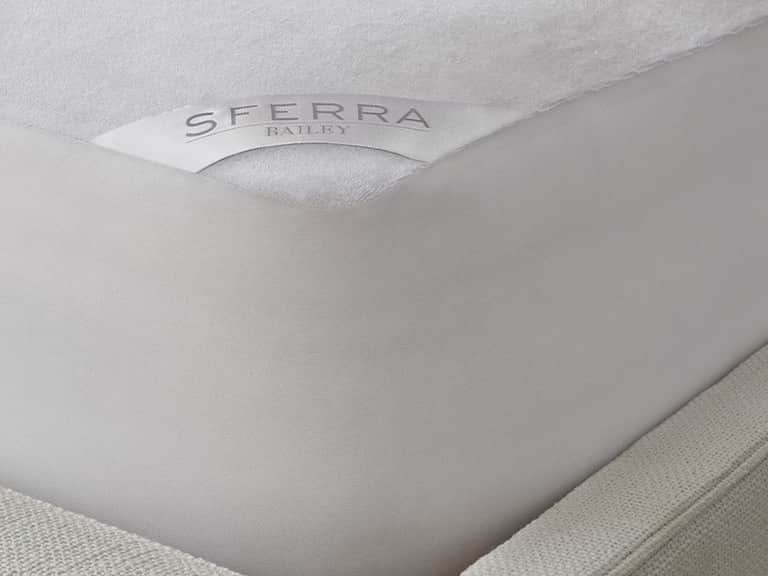
Waterproofing can be useful for routine cleanup, but layers must not undermine fit or create a soft, loose surface. If considering a protector, verify that it is specifically compatible with the crib mattress, fits tightly, and is permitted by both manufacturers’ instructions. A protector is not a license to add a plush pad, topper, or extra layer. When in doubt, use only the fitted sheet and components explicitly approved for that product.
Safe sleep is a set of practices, not a property that can be purchased in a single label. A mattress cannot guarantee that an infant will sleep safely. It can, however, be used as part of a properly prepared sleep space when it is in good condition, fits the crib, and is used according to current guidance.
Care, cleaning, and the ordinary life of a mattress
Before the first use, read the care label and keep the instructions. Some covers are removable; others are not intended to be taken off. Some surfaces can be wiped, while others require a specific cleaning method. Do not assume that a mattress is machine washable, that a cover can be laundered separately, or that a household cleaner is appropriate. Excessive moisture or unapproved products may damage materials or affect the mattress’s performance.
Clean promptly after a spill, using only the method the manufacturer recommends. Allow the mattress to dry completely before putting it back into use if the instructions call for drying. Do not use heat, solvents, disinfectants, or scented treatments unless the manufacturer explicitly permits them. Keep the product’s paperwork together with the crib instructions; it is far easier to check a care detail before a spill than after one.
Inspect the surface periodically. Look for sagging, tears, loose stitching, exposed components, persistent odors, or signs of moisture that have not resolved. Check the fit again as part of ordinary room maintenance. If a mattress has been stored, examine it before use and confirm that it has remained dry and undamaged. Hand-me-downs deserve particular scrutiny: age, condition, recall history, and compatibility matter more than the fact that a mattress previously served another family.
Do not rely on a product’s expected lifespan as proof that it remains suitable. Real-world wear depends on use and care, and manufacturers’ recommendations differ. Follow the model-specific guidance and replace a mattress when it is damaged, no longer fits, or no longer meets the instructions for safe use.
A measured approach to buying
It helps to turn a crowded product page into a short list of verifiable questions. Start with the exact crib model and its mattress requirements. Then identify the mattress dimensions, construction, materials, certification scope, care instructions, and manufacturer contact information. If a product description uses sweeping language but provides little detail, ask for documentation rather than filling the gaps with assumptions.
- Compatibility: Is this mattress approved for the specific crib or sleep product, and does it meet the manufacturer’s dimensional requirements?
- Construction: What are the core, padding, cover, and any waterproof or barrier layers made from?
- Certifications: Which organization issued each certification, what does it cover, and can the claim be verified for this model?
- Safety: Does the product meet applicable infant mattress requirements, and has the exact model been checked for recalls?
- Care: How should the mattress be cleaned, dried, stored, and inspected?
- Condition: Is it new or used, and are there any signs of damage, alteration, moisture, or loss of shape?
Price and brand reputation can be part of a decision, but neither substitutes for these answers. A higher price does not itself establish superior safety or a more suitable sleep surface. Nor does a lower price necessarily tell you what materials were used. Evaluate the documented product in front of you, not the atmosphere created by its marketing.
A quieter kind of reassurance
Preparing a baby’s room invites a particular kind of attention. Small decisions accumulate: the crib’s position, the sheet’s fit, the material described in a product listing. It is easy for the search to become a contest in adjectives—pure, natural, clean, premium—when what parents need is a plain account of what the product is and how it should be used.
An organic crib mattress may suit a family’s material preferences, especially when the manufacturer provides transparent construction details and meaningful third-party documentation. But the most important questions remain practical. Does it fit the crib? Is the surface firm and flat? Is it in good condition? Are you using it exactly as intended, with a fitted sheet and without extra soft bedding?
Those questions are less glamorous than a promise on a label, and more useful. The best decision is not necessarily the one with the most impressive vocabulary. It is the one grounded in verifiable information, careful fit, appropriate care, and safe-sleep practices that can be followed night after night.
Frequently asked questions
Does “organic” mean a crib mattress is safer?
No single material label establishes that a mattress is safer in every respect. Organic claims and certifications may describe particular fibers or components. Check what is certified, confirm that the mattress meets applicable requirements, and prioritize correct fit, a firm flat surface, and current safe-sleep guidance.
Can I add a mattress topper or padded protector?
Do not add a topper or soft padding to an infant’s sleep surface. A protector should be used only if it is compatible with the mattress, fits securely, and is allowed by the relevant manufacturers’ instructions. The sleep space should remain firm, flat, and free of loose or soft items.
How can I tell whether a crib mattress fits correctly?
Follow the crib and mattress manufacturers’ instructions for compatible dimensions and installation. The mattress should lie flat and fit without hazardous gaps. Do not use improvised materials to fill spaces. If you are unsure, contact the manufacturers before using the setup.
What should I do with an older or secondhand mattress?
Check its model and recall history, examine it for damage or moisture, verify that it fits the crib, and review the manufacturer’s instructions. Do not use a mattress that is sagging, altered, damaged, or of uncertain compatibility. When questions remain, seek advice from the manufacturer or choose a suitable mattress with clear documentation.