Bedding · Materials & comfort
How Wool Mattress Toppers Manage Moisture and Temperature
A wool topper does not make a bed impervious to heat, humidity, or the peculiar weather of a New York apartment. What it can do is add a yielding layer that absorbs some moisture, encourages air exchange, and helps soften the small fluctuations that can turn a night’s sleep uncomfortable.
Published November 21, 2026
There is a particular intimacy to the climate of a bed. A room may be cool, the radiator quiet, the window closed against the street, and yet beneath the covers a sleeper can feel too warm, then suddenly less warm, as if the night were conducting a series of private negotiations. Bedding sits between the body and the room, and its materials influence how those negotiations unfold. Wool, in a mattress topper, is notable not because it promises a perfectly controlled temperature, but because its fibers can help moderate moisture and heat while adding a modest cushion to the sleep surface.
The word topper can suggest an overhaul: a new bed disguised as a layer. In practice, a wool topper is a comfort and bedding component placed above the mattress, usually beneath the fitted sheet. It may make a surface feel softer or more even, and it can contribute to a more comfortable sleep microclimate. It cannot repair a sagging mattress, correct inadequate support, or guarantee that a hot sleeper will stay cool. The distinction matters. The best way to understand wool is not as a miracle material, but as a useful fiber with particular properties—and limitations worth knowing before bringing it home.
What wool does in a bed
Wool fibers have a naturally crimped structure. In a filled topper, that structure creates small spaces among the fibers, giving the layer a degree of loft and allowing air to move through it. Wool can also take up moisture vapor from the surrounding environment. Together, these features help explain why wool bedding is often described as breathable and moisture-managing.
That description needs a little precision. When a person sleeps, the body releases heat and moisture. The amount varies with the individual, the room, the season, clothing, bedding, and health. Wool can absorb some water vapor into its fibers without immediately feeling damp in the way a saturated surface might. This can help buffer changes in the sleep environment. It does not remove moisture from the bedroom, nor does it replace ventilation, clean bedding, or attention to persistent dampness.
The air spaces in a wool-filled layer may also help reduce the sensation of trapped warmth. Airflow and moisture exchange are related but not identical: a fiber can take up moisture while a construction can still feel warm if it is densely packed, covered by a less-breathable fabric, or layered under heavy bedding. The whole assembly matters. A topper’s wool, stitching, cover, mattress, protector, sheets, duvet, and room temperature all contribute to the result.
Wool is often called temperature-regulating, a phrase that can sound more active than the material’s role really is. It does not sense that a sleeper is warm and switch itself into cooling mode. Rather, its fiber structure and moisture behavior can help smooth some changes in the bed’s immediate environment. Some sleepers appreciate this balance across seasons; others may prefer a lighter, cooler-feeling setup or may simply not enjoy wool’s particular texture and warmth.
Moisture management is not waterproofing
One of the most useful distinctions in bedding is between moisture absorption and liquid protection. Wool can take up moisture vapor, but a wool topper is not automatically waterproof. Sweat, spills, a leak, or other liquid can pass through a topper and reach the mattress unless a separate protective layer is designed to stop it. If protecting a mattress from liquid is a priority, check the specifications of a suitable mattress protector rather than assuming that a natural fiber will provide a barrier.
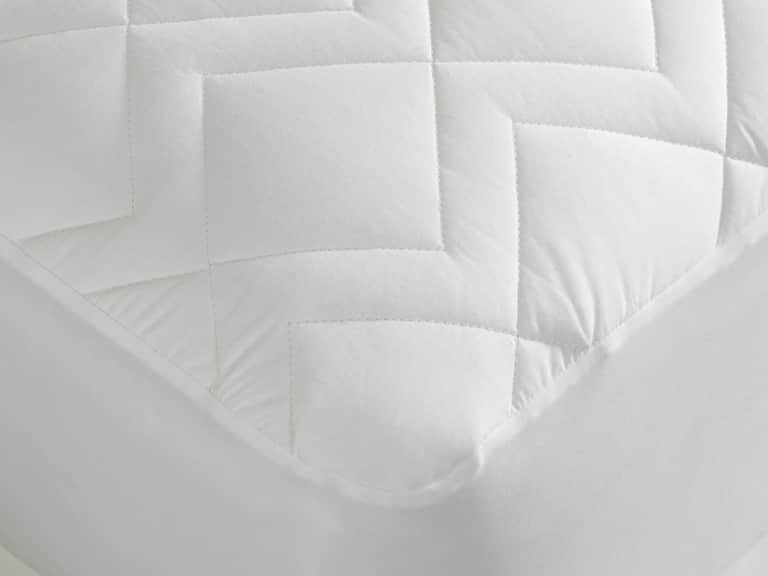
A waterproof protector can also change the feel of the bed’s surface and its movement of heat and moisture. Some are quieter and more breathable than others; construction and fabric matter. A sensible layering order is generally mattress, protector if needed, topper, then fitted sheet—but always follow the care and use instructions for the individual pieces. Not every topper is intended to be used beneath every kind of protector, and a waterproof layer may affect the microclimate that attracted someone to wool in the first place.
In a compact city apartment, where the bedroom may share air with a kitchen, a busy street, or a building’s uneven heating system, this distinction has practical consequences. A topper can contribute to a comfortable bed, but it cannot compensate for a room that is persistently humid or poorly ventilated. If bedding feels damp over and over, look beyond the topper: consider room airflow, laundering, the mattress foundation, and whether moisture has an identifiable source.
The comfort question: loft, fill, and feel
“Wool topper” names a family of constructions, not a single sensation. The amount of wool, the way it is distributed, the density of the fill, and the quilting all influence how the layer feels. A thin, lightly filled pad may offer only a small change in surface softness. A loftier construction can feel more cushioned, but it may also add warmth and raise the bed enough to affect fitted-sheet fit.
Wool tends to offer a buoyant, gently yielding feel rather than the close contouring associated with some foam materials. That generalization is not a substitute for trying a particular construction, and differences in fill and quilting can be substantial. A topper may make a firm mattress feel less austere, but it does not necessarily provide the deep pressure relief of a thick, contouring comfort layer. Nor should it be treated as a cure for pain. Persistent discomfort is a matter for an appropriately qualified health professional, not a bedding promise.
It helps to describe the problem before shopping. Is the mattress uncomfortable because it feels too firm at the shoulders or hips? Does it feel too warm? Is the surface uneven? Is the issue a temporary change in preference, or a mattress that has lost support? A topper can be a reasonable way to adjust the surface feel of a sound mattress. It is a less convincing solution to structural wear, deep sagging, or an unsupportive base.
For a couple, a shared bed introduces another set of compromises. One person may want more softness, while the other prefers a firmer surface or sleeps warmer. A single topper affects both sides. Before choosing, consider whether the desired change is genuinely shared, whether a split configuration is available, and whether different blankets or sheets could address some temperature preferences without altering the entire bed.
Construction and covering: the details that shape performance
When comparing wool mattress toppers, look past the headline material. Ask what the filling is, how much is used, and how it is held in place. Quilting can limit shifting, but its pattern and spacing affect how evenly the fill is distributed. A topper with corner straps or another securing method may be less likely to migrate; a loose layer may require more frequent straightening, especially on a slick mattress cover.
The fabric surrounding the wool is just as consequential. A cotton cover, for example, may offer a different hand and airflow from a tightly woven synthetic fabric. Neither a natural-fiber label nor a particular weave guarantees a specific result on its own. Check the construction, care instructions, and the maker’s description of the materials. If certifications are important to you, verify what they cover: a label may apply to a component or a production standard rather than every aspect of the finished product.
Thickness and fill weight are useful comparisons, but they are not universal measures of comfort. Two toppers with similar dimensions can behave differently because their wool is arranged or compressed differently. Where possible, review the full specifications and return terms, and be realistic about the limits of judging bedding through a product description. A polished phrase such as “cloud-like” tells you less than a clear account of fill, cover, attachment, fit, and care.
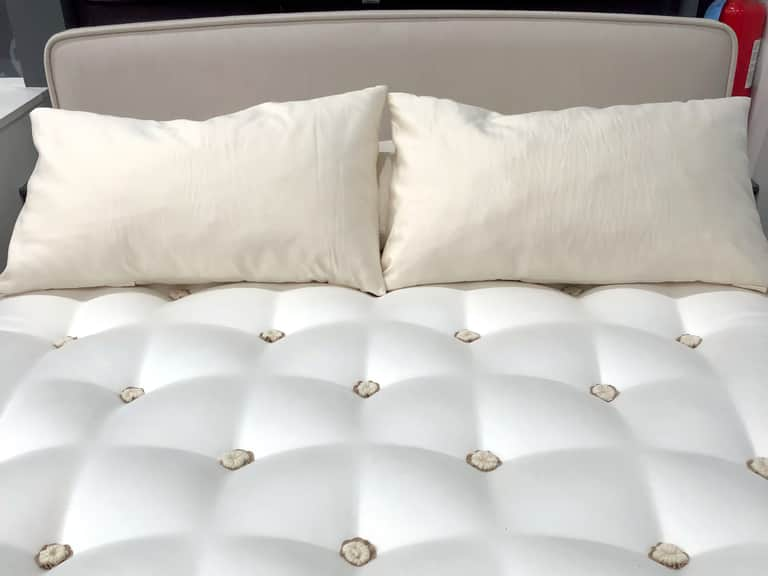
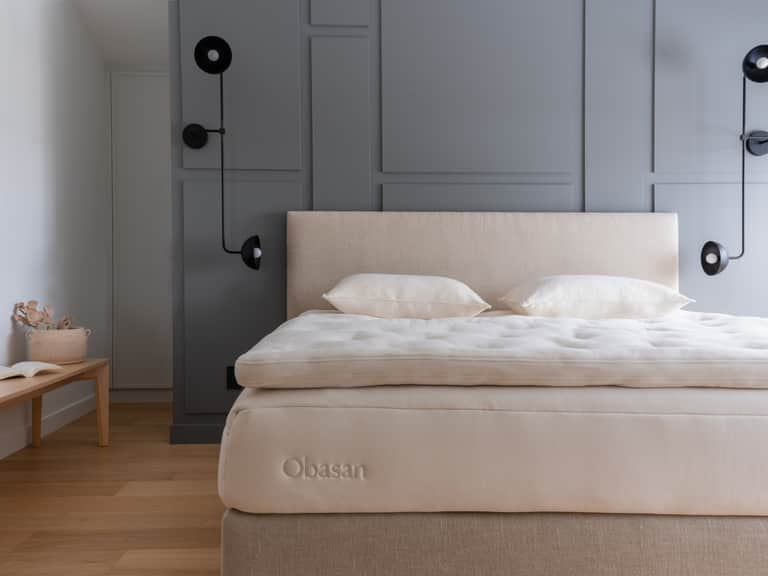
Wool also appears in layered mattress systems, where it may be quilted into a cover or used alongside latex. These are not necessarily the same thing as a removable, stand-alone wool mattress topper. For example, the Obasan Deluxe Dunlop Latex Mattress is a complete layered mattress with a cotton cover quilted with wool and an included latex-and-wool topper. It illustrates how wool can be part of a larger sleep system, but its construction should not be confused with a simple wool-filled pad intended to sit on an existing mattress.
Fit matters more than it sounds
A topper that is comfortable in theory can be irritating in practice if it slides, bunches, or makes the fitted sheet pop off in the middle of the night. Confirm the mattress’s length and width, then measure its depth with the protector and any existing pad in place. Compare that total with the fitted sheet’s pocket depth and the topper’s stated dimensions. Deep mattresses and pillow-top designs can require more generous pockets than standard bedding provides.
Also consider how the topper attaches. Elastic corner bands, a fitted skirt, or a simple flat construction will each behave differently. The shape of the mattress and the slipperiness of its cover can affect stability. In a smaller New York bedroom, where a bed may be pushed close to a wall or squeezed between furniture, the practicalities of lifting and straightening the layer are worth considering. A topper that must be wrestled into position every morning may not remain a source of delight for long.
Before washing or installing anything, read the care label. Some wool toppers are designed for limited cleaning rather than machine washing. Others may have removable covers, though the wool fill itself could still require special handling. A label’s instructions are more reliable than a general rule applied to every wool product. If the topper is bulky, consider how you would dry it fully; storing a damp textile can cause odor and other problems.
Caring for wool without turning it into a project
Routine care is often quieter than the marketing around bedding. Use a washable fitted sheet, and, if appropriate for the construction, a protector to reduce the amount of soil reaching the topper. Airing bedding periodically may help it feel fresher, but avoid direct heat or sunlight if the manufacturer warns against them. Wool can be sensitive to rough handling, high heat, and inappropriate washing, so do not assume that a natural fiber belongs in the washing machine simply because the cover looks sturdy.
For a small spill, consult the care instructions promptly. Some makers recommend spot cleaning; others specify a particular method. Avoid soaking the entire fill unless the instructions expressly allow it, and make sure any cleaned area dries completely. Professional cleaning may be appropriate for some products, but check first: the cover, quilting, and wool fill may respond differently to treatment.
Over time, wool can compress. The degree depends on the amount of fill, use, construction, and care. Occasional gentle redistribution may help in designs where the fill is intended to move, but a tightly quilted topper is not necessarily made to be fluffed or shaken aggressively. If the layer has become uneven, thin, or persistently lumpy, consult the manufacturer rather than trying to revive it with force.
How to decide whether a wool topper suits you
Begin with your own sleep conditions, not an abstract ranking of materials. A wool mattress topper may be worth considering if you want a natural-fiber layer, modest cushioning, and a material associated with moisture absorption and airflow. It may be less suitable if you need a waterproof surface, want a strongly contouring feel, prefer a very thin and cool layer, or require frequent machine washing. Those are not verdicts on wool; they are questions of fit between a material and a household.
- Identify the goal. Separate the desire for a softer surface from the need for mattress protection or better support.
- Check the construction. Compare fill, quilting, cover fabric, attachment method, and dimensions—not just the word “wool.”
- Measure the full bed. Include the mattress protector and any other layers when checking fitted-sheet depth.
- Read the care details. Confirm how the topper can be cleaned, dried, aired, and stored.
- Keep expectations measured. Wool may help moderate the bed’s immediate environment; it cannot control the bedroom climate or replace a worn-out mattress.
The appeal of wool is partly that it performs without announcing itself. The fiber takes up moisture vapor, the loft leaves room for air, and the layer can soften the surface without the deep embrace of foam. But a good night is rarely the achievement of one material. It is the result of a bed that fits the sleeper, a room that does not fight the season, and bedding that can be maintained without ceremony. In that larger arrangement, wool is less a solution than a thoughtful intermediary—between the body and the mattress, between warmth and airflow, between the night’s changing conditions and the desire to sleep through them.
Frequently asked questions
Do wool mattress toppers keep sleepers cool?
They may help some sleepers feel more comfortable by supporting airflow and absorbing some moisture vapor. They are not active cooling devices, and the experience depends on fill, cover, other bedding, room conditions, and personal preference. A wool topper can still feel warm to someone who sleeps hot or uses heavy covers.
Does wool make a mattress waterproof?
No. Wool’s capacity to take up moisture vapor is different from a waterproof barrier. For protection from liquid spills or accidents, check for a purpose-made waterproof protector and consider how its construction may affect the feel and breathability of the bed.
Can a wool topper fix an uncomfortable mattress?
It can change the surface feel of a mattress that remains structurally sound. It is unlikely to correct deep sagging, inadequate support, or damage to the mattress. If the bed’s underlying support has failed, adding a comfort layer may disguise the problem briefly without resolving it.
How do I choose the right thickness?
Start with the change you want. A thinner layer may make a modest adjustment, while a loftier topper can add more cushioning and may affect warmth, overall bed height, and sheet fit. Compare the product’s dimensions and construction, then measure the bed with all existing layers in place.
Can I wash a wool mattress topper at home?
Only if the manufacturer’s care instructions say that the particular topper can be washed at home. Wool products differ in construction, and machine washing or high heat can damage some fills or quilting. Follow the label, including instructions for drying, rather than relying on a general rule for wool.